

Everglades Law Center, on behalf of the National Audubon Society (Audubon), has challenged the U.S. Army Corps of Engineers’ (Corps) issuance of a Clean Water Act permit for a 10,000-home, 6,700+-acre development project in the Western Everglades. Our complaint alleges the environmental review and analysis conducted by the Corps and the U.S. Fish and Wildlife Service (Service) in approving the project violated the National Environmental Policy Act (NEPA), the Endangered Species Act (ESA), and the Clean Water Act (CWA). The Corps issued an Environmental Assessment that found the project will have “no significant impacts” on the region’s environment and will not jeopardize or “take” (meaning harm, harass, etc.) ecosystems and endangered and threatened species. This determination both ignores the best available science and data and threatens regional conservation goals.
Background
Conservation and rural lands in Southwest Florida are dwindling in the face of increasing development and urbanization, threatening the region’s wetlands and the native species that rely on them. One such development, the Kingston Project, was permitted last year to begin the construction of a staggering 10,000 homes on more than 6,700 acres in Lee County.
Kingston’s environmental impacts were initially considered under a state permitting process before the permitting authority was returned to the Corps in 2024 (learn more about the assumption and later revocation of Florida’s CWA Section 404 authority here and here). Throughout both the state and federal processes, Audubon has advocated for a more thorough review of environmental impacts, providing relevant scientific studies and data, and even suggesting feasible, reasonable design changes that could significantly reduce adverse impacts.
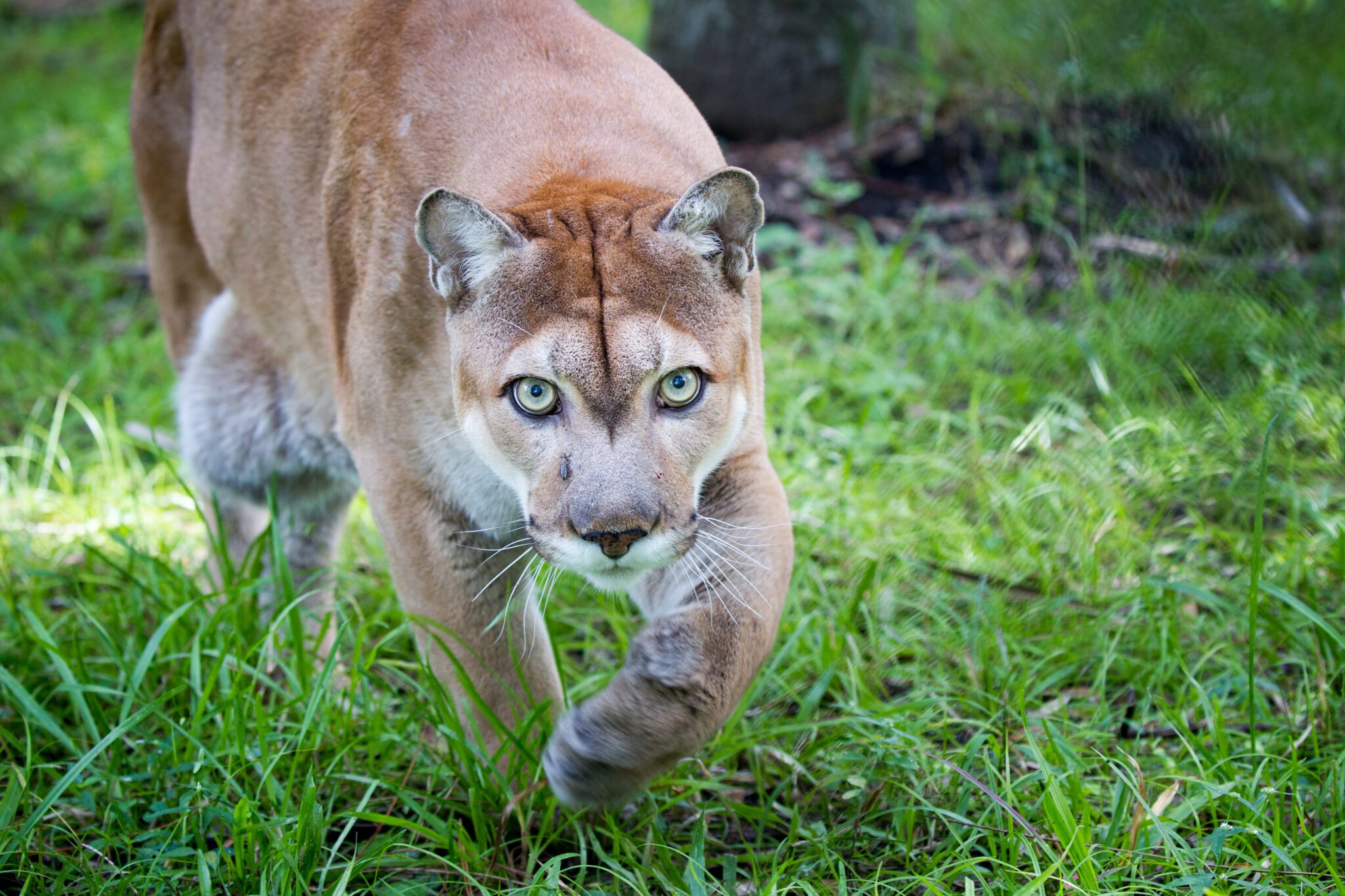
Audubon’s concern stems not only from its interests as a major conservation and wildlife organization, but also its rights as a neighboring property owner. Audubon’s 13,000-acre Corkscrew Swamp Sanctuary (the “Sanctuary”) is directly adjacent to the Kingston site. Audubon has spent years restoring and carefully managing the Sanctuary’s wetlands, which serve as crucial habitat for native species like the endangered Florida panther and the famous ghost orchid, as well as hundreds of species of birds, both resident and seasonal.
ELC filed the lawsuit, alongside co-counsel Richard Grosso, on behalf of Audubon in August 2025 in the U.S. District Court for the Middle District of Florida against defendants the Corps and the Service. Our Complaint alleged numerous NEPA, ESA, and CWA violations related to the federal agencies’ review of the developer’s application for a Section 404 permit to authorize the dredge and fill of wetlands and other “Waters of the United States” throughout the Kingston Project site. Before the Corps can issue a Section 404 permit, federal law requires a rigorous review of a project’s impacts on the environment, including waters, wetlands, and threatened and endangered species.
Legal and Environmental Significance
The Kingston Project is one of the largest proposed developments in Southwest Florida, a region facing increased development pressure. As sprawl worsens, the protection of public and private conservation lands in the area—including the project-bordering Sanctuary—becomes all the more important. The federal defendants’ failure to meaningfully consider many aspects of Kingston’s environmental impact represents an arbitrary and capricious abdication of their duties under federal law.
Our complaint alleges that Kingston will have significant impacts on the region, on the Sanctuary, and on endangered and threatened species, and it fails to include common sense design elements that could avoid and reduce these impacts. Being directly adjacent to and upstream of the Sanctuary, the land clearing, wetland fill, and construction required to build the project in its proposed configuration will have direct hydrological impacts on the Sanctuary that could be avoided with design modifications. Our complaint also highlights how the project’s design severs essential wildlife corridors, limiting the ability of species which require large home ranges (like the Florida panther) to safely traverse the area, and find mates, prey, and shelter. The project’s own analyses show that Kingston will nearly double average annual daily traffic trips—adding over 82,000 net trips daily—yet the Corps and Service claim they cannot ascertain the impact that increased traffic will have on the incidence of Florida panther road mortalities, the leading cause of death for this endangered species.
The project also impacts Audubon’s ability to manage and continue restoring the Sanctuary. The project’s design does not sufficiently mitigate impacts to the Sanctuary or the surrounding region’s habitat, despite numerous attempts by Audubon to offer practicable design alternatives to both the developer and the Corps. As permitted, the project’s design will likely restrict Audubon’s ability to use prescribed fire to maintain habitats—a practice that reduces the risk of large, damaging wildfires that would also threaten the proposed development’s homes and businesses.
Audubon repeatedly offered reasonable, practicable project design alternatives that the Corps could have incorporated as permit conditions to fulfill its legal duty under the CWA to minimize adverse impacts on aquatic ecosystems. The Corps ignored these, failing to sufficiently minimize Kingston’s effects on downstream wetlands and surface waters.
In spite of Kingston’s enormous scale, the Corps prepared only an Environmental Assessment (EA) of the project, finding its net impacts were not significant, and therefore did not require a more detailed and comprehensive Environmental Impact Statement (EIS). The Corps’ EA also failed to take a hard look at all of the project’s impacts, overestimating the benefit of its mitigation measures and largely ignoring impacts to the neighboring Corkscrew Swamp Sanctuary and Audubon’s private property rights. While Audubon and other interested organizations and individuals submitted thousands of comments seeking a public hearing during Kingston’s public comment period, the Corps ultimately decided there was no “valid interest to be served by a public meeting”.
The Service’s Biological Opinion (BiOp) for the project also failed to meaningfully assess its impacts. The Service concluded the project “was not likely to adversely affect” the numerous threatened and endangered species in the area, despite thousands of acres of impacts to habitat. In addition, the BiOp, ignoring the best available science, failed to set a limit on vehicle-caused deaths as a result of the project for the endangered Florida panther—such a limit is necessary because it would serve as a legal trigger requiring the Service to reevaluate the project’s traffic-related threats to panthers should it be exceeded.
Looking Forward
Project construction is ongoing as our case is pending in federal court. While we litigate and await a final ruling, Audubon’s Sanctuary risks direct water quality impacts, and increased exposure of native species to traffic impacts, light pollution and noise disturbance. ELC and Audubon will continue to work closely together and with our partners to ensure these impacts will be minimized and to secure a favorable outcome in this case.
The Sanctuary is the beating heart of wild Southwest Florida, home to panthers and ghost orchids, spoonbills and wood storks, as well as ancient bald cypress that cannot fight for themselves. While the owners of Kingston have a right to the economic use of their private property, it should not come at the expense of Audubon’s, or the public trust resources it has safeguarded for more than 70 years.
Read our Complaint (here) and Amended Complaint (here).
Our Client
The National Audubon Society is a non-profit wildlife and conservation organization with more than 367,000 members, offices in 23 states—including its Florida program, Audubon Florida—and a presence in all 50 states through more than 450 certified chapters, its conservation action centers, its sanctuaries, and its education and science programs. Audubon’s mission is to protect birds and the places they need, today and tomorrow. Audubon works to conserve and restore natural ecosystems, focusing on birds, other wildlife, and their habitats for the benefit of humanity and the earth’s biological diversity.
Audubon’s Corkscrew Swamp Sanctuary is a gateway to the Western Everglades, a 13,400-acre wetland preserve that hosts many native imperiled species and attracts visitors from all over the world. The Sanctuary’s wetlands filter water as it slowly flows across the land, refilling local aquifers, improving resilience against catastrophic wildfires, and improving water quality for the estuaries and beaches along the coastlines of Naples and Bonita Springs. Audubon conducts considerable scientific research, land management, and educational and recreational activities on the Sanctuary and surrounding lands. Audubon has invested over many years and resources restoring wetlands and habitats within the Sanctuary that have been impacted by past activities at the proposed project site. The Sanctuary hosts more than 80,000 visitors annually.